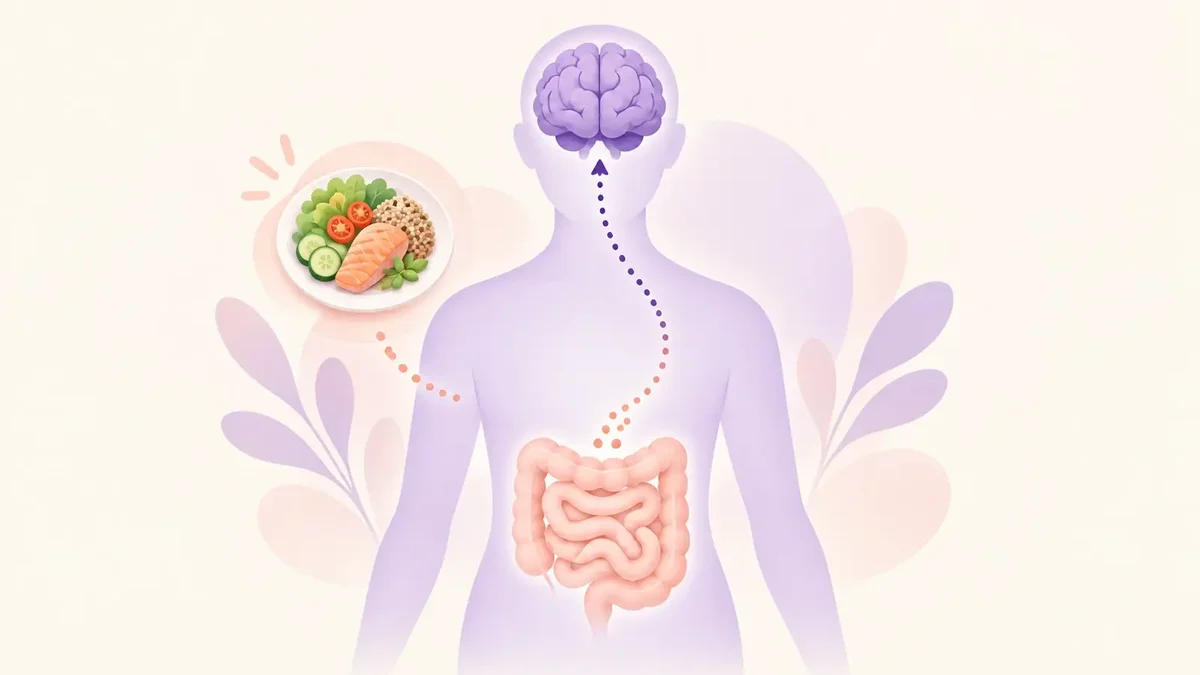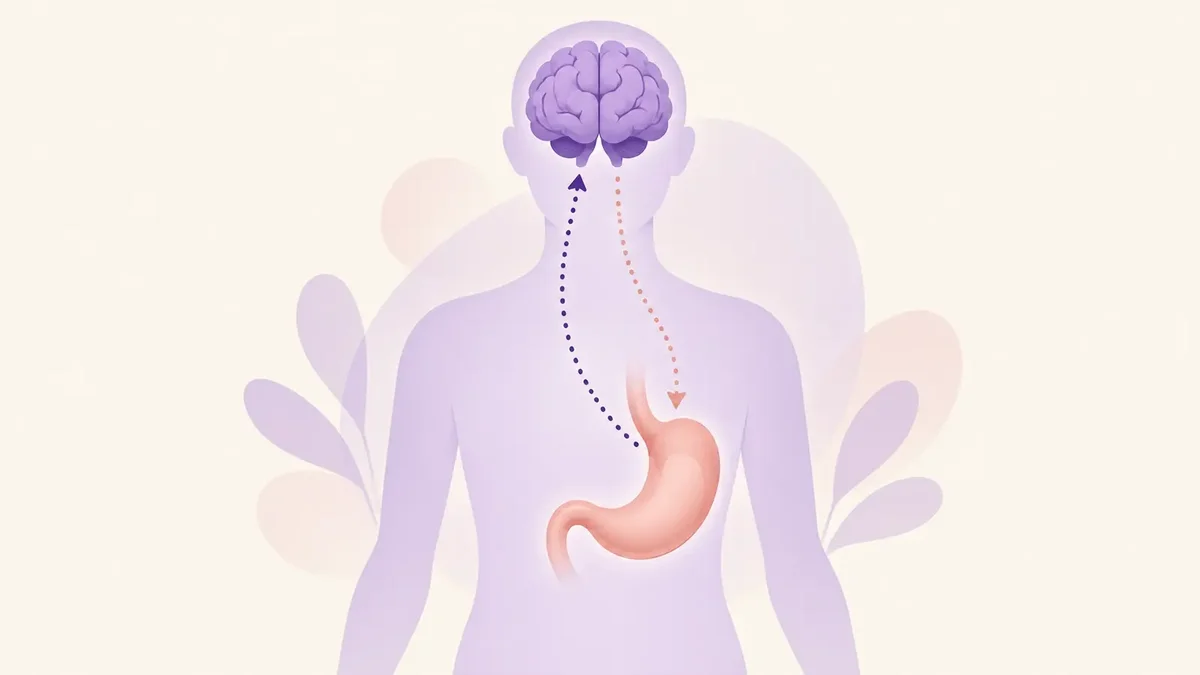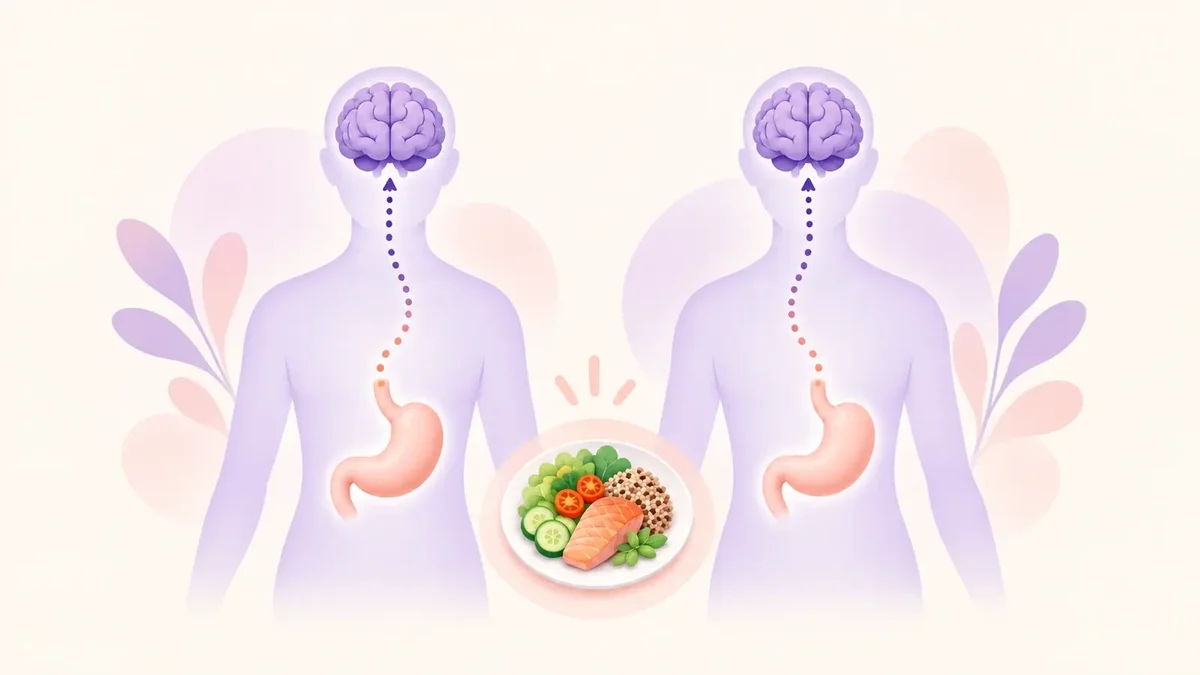
If you have been reading about Mounjaro, you will have come across GLP-1. You may also have seen a second set of letters: GIP.
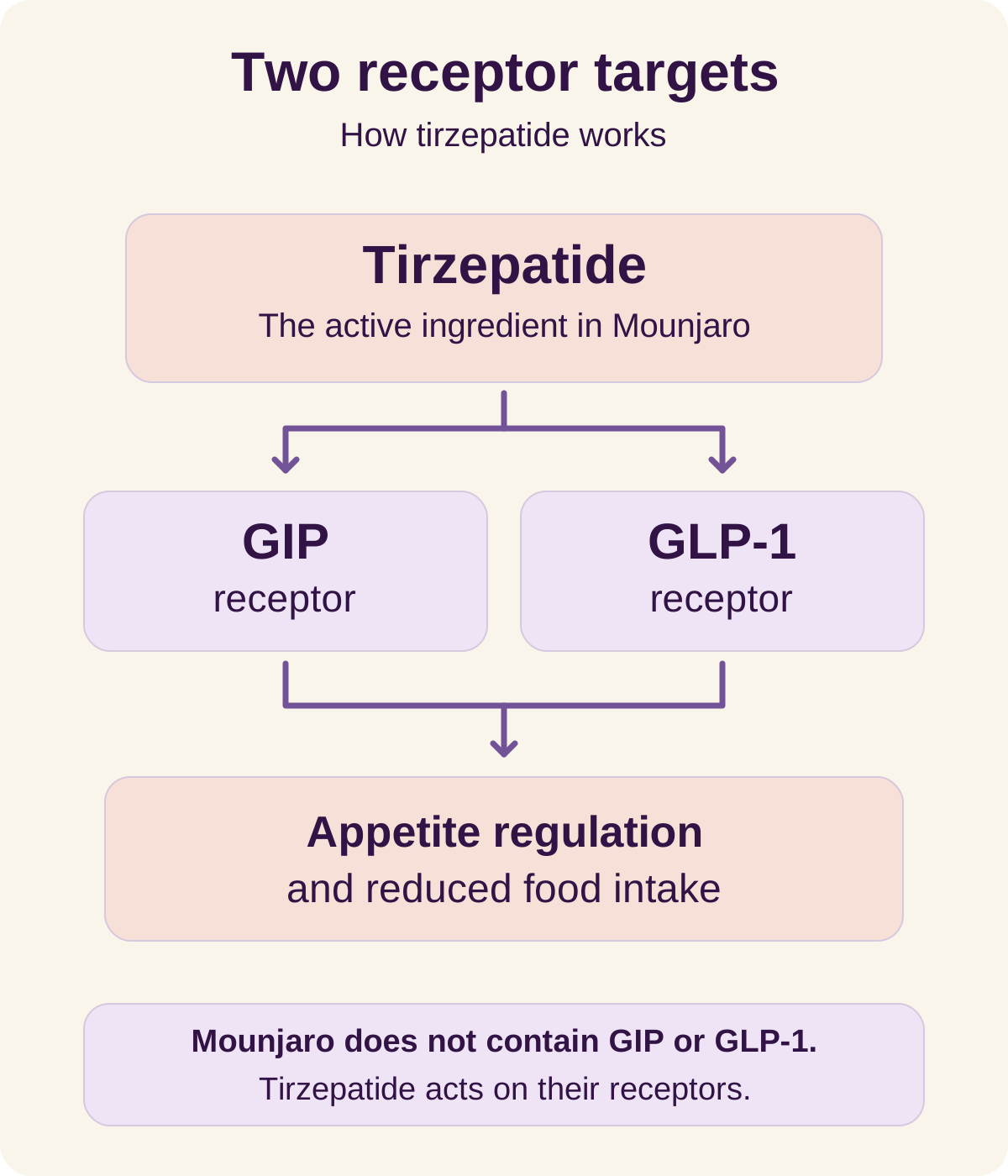
GIP is a hormone your body makes on its own. It matters here because Mounjaro works differently from medicines that act on GLP-1 alone. Its active ingredient, tirzepatide, acts on the receptors for both hormones, GLP-1 and GIP.
So what does GIP do, and why does acting on it matter?
What is GIP?
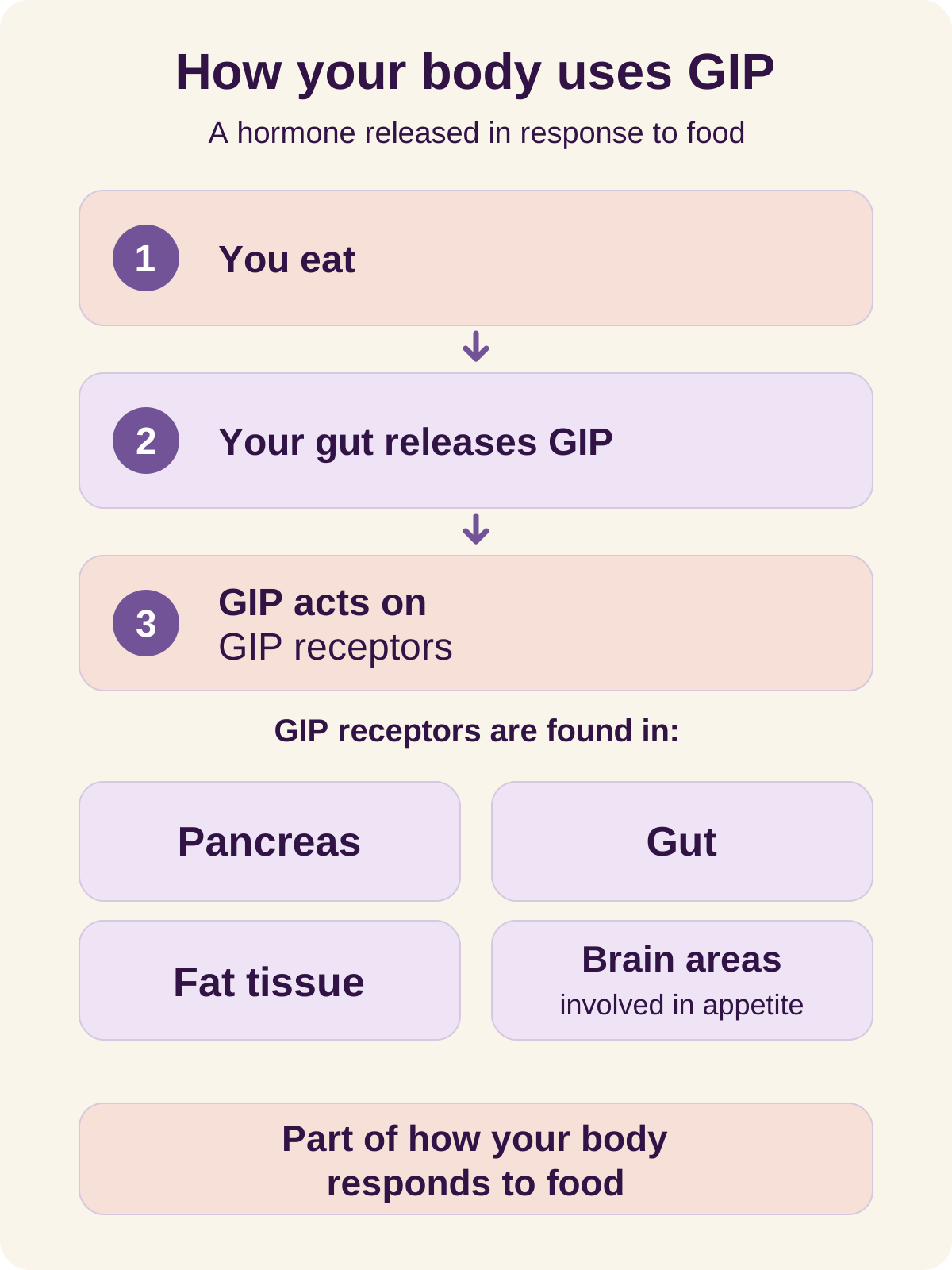
GIP is short for glucose-dependent insulinotropic polypeptide. It is released by your gut when you eat and is part of the way your body handles food.
You may occasionally see it called gastric inhibitory polypeptide, which is the older name. The newer one is more accurate, because it describes what the hormone actually does: GIP is released from cells in the gut after you eat and helps stimulate insulin release from the pancreas when blood glucose is raised. In plain terms, it has more of an effect when your blood sugar is raised than when it is at a normal level.
GIP receptors are found in several tissues, including the pancreas, the gut and fat tissues. They are also found in areas of the brain involved in regulating appetite and food intake, which is the part most relevant to weight management.
Why does Mounjaro target GIP?
Mounjaro contains tirzepatide, described in its product information leaflet as a long-acting GIP and GLP-1 receptor agonist. That phrase does a lot of work, so it is worth unpacking.
An agonist is something that activates a receptor. Tirzepatide is not GIP and it is not GLP-1. It is a molecule designed to act on the receptors that those two hormones normally use.
Because receptors for both hormones are found in areas of the brain involved in appetite, acting on both is thought to be part of how tirzepatide reduces appetite and food intake. In clinical studies, people taking tirzepatide reported feeling fuller, less hungry and less troubled by food cravings, and ate less.
WORTH KNOWING
Mounjaro does not contain GIP or GLP-1. Tirzepatide acts on the receptors those hormones use, which is a different thing from topping up a hormone you are short of.
GIP and GLP-1: what is the difference?
They are two different hormones with two separate signalling pathways. Both are released in response to food and both have receptors in areas of the brain involved in appetite.
| Feature | GIP | GLP-1 |
|---|---|---|
| Stands for | Glucose-dependent insulinotropic polypeptide | Glucagon-like peptide-1 |
| Made by the body? | Yes | Yes |
| Released in response to food? | Yes | Yes |
| Receptors found in appetite areas of the brain? | Yes | Yes |
| Mounjaro targets it? | Yes | Yes |
| Wegovy targets it? | No | Yes |
Wegovy contains semaglutide, which acts on the GLP-1 receptor only. Mounjaro acts on both.
Does GIP help you lose weight?
Not on its own, no. GIP is a hormone, not a treatment, and describing it as a fat-burning hormone would be misleading.
The weight management effects of Mounjaro come from what tirzepatide does overall. Its product information leaflet describes reductions in body weight and body fat mass, driven mainly by eating less through appetite regulation.
There is also laboratory and animal research suggesting that tirzepatide may influence how the body uses fat through the GIP receptor. That work is genuinely interesting, but it has not been shown to translate into a separate effect in people, and it should not be read as evidence that GIP “burns fat”.
Mounjaro is licensed for weight management alongside a reduced-calorie diet and increased physical activity in eligible adults. The medicine supports those changes rather than replacing them.
Does acting on two receptors make Mounjaro more effective?
This is the question most people are wondering about, and it deserves a careful answer rather than a quick one.
It is tempting to assume that two receptors must mean twice the effect. Tirzepatide's own product information leaflet suggests it is not that simple: its activity at the GIP receptor is similar to that of the body's own GIP, while its activity at the GLP-1 receptor is lower than that of the body's own GLP-1. Two pathways, in other words, but not two identical ones.
Tirzepatide has been compared directly with semaglutide in a head-to-head study, and that comparison is found in the product information leaflet for anyone who wants to read it. What a trial cannot tell you is how you personally will respond to each treatment. People on the same dose of the same medicine can have quite different experiences.
Whether Mounjaro or another treatment is appropriate for you is a decision for a prescriber to make, based on your health and history rather than on receptor agonists counts.
You might also find this useful
For a practical comparison of the two treatments, see our guide to the differences between Mounjaro and Wegovy.
Common questions
What does GIP stand for?
Glucose-dependent insulinotropic polypeptide. It is a hormone your body makes in response to food.
Is GIP the same as GLP-1?
No. They are different hormones acting on different receptors, though both are released in response to food and both have receptors in appetite-related areas of the brain.
Does Mounjaro contain GIP?
No. It contains tirzepatide, which acts on the GIP and GLP-1 receptors rather than supplying either hormone.
Does Wegovy target GIP?
No. Wegovy contains semaglutide, which acts on the GLP-1 receptor alone.
Can you take a GIP supplement?
No. GIP is a hormone produced inside your body, not a nutrient, and there is no supplement that provides it. Anything marketed on that basis is worth treating with suspicion.
Why does tirzepatide act on both receptors?
It was designed to. Both receptors are involved in the body's response to food, and both are found in areas of the brain that influence appetite.
Considering prescription weight loss treatment?
Our online consultation lets a UK-registered prescriber review your answers and assess whether weight management treatment is appropriate for you. If it is not suitable, we will explain why.
Any medicine prescribed is intended to be used as part of a wider weight management plan, alongside healthy eating and increased physical activity.
Related guides
- Mounjaro vs Wegovy: What's the Difference?
- How Does Mounjaro Work?
- What Is GLP-1?
- Why Am I Still Hungry on Mounjaro?
- When Does Mounjaro Start Working?
ABOUT THIS GUIDE
Written for people considering or already taking weight management treatment. The pharmacology described here is drawn from the approved product information for Mounjaro.
This guide is general information and is not a substitute for advice from a prescriber who knows your medical history. Speak to your GP, pharmacist or our clinical team before starting, stopping or changing any treatment.