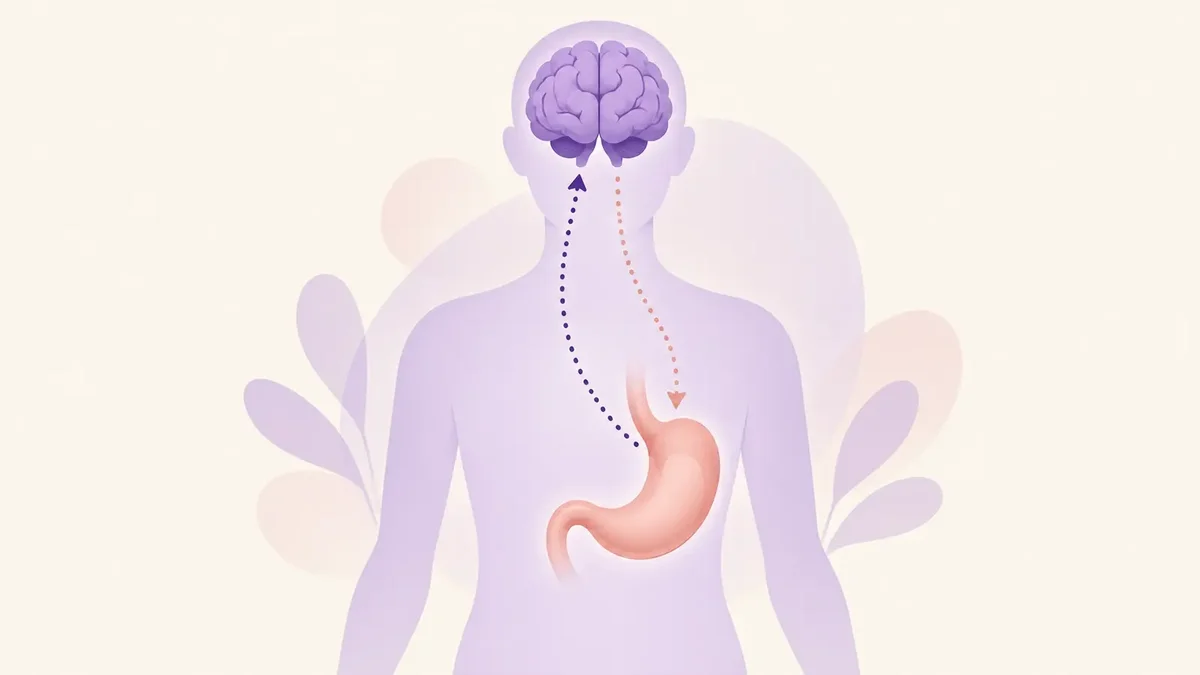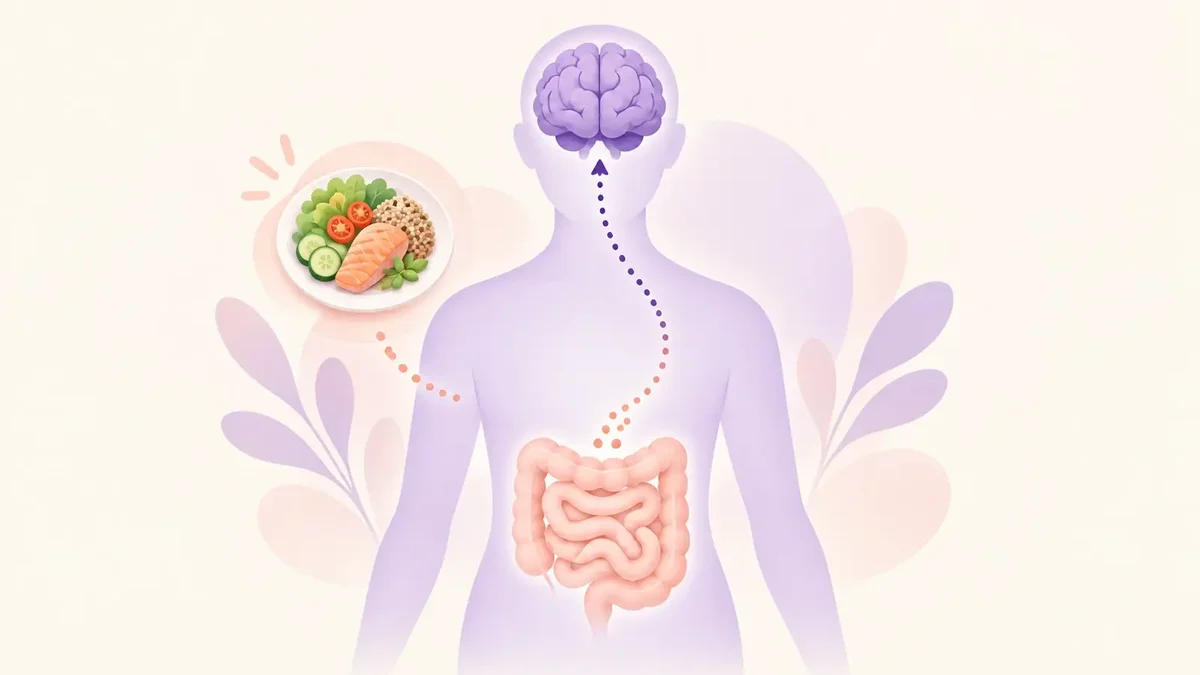
If you've been looking into weight loss injections, you've probably come across the term GLP-1.
It's often mentioned alongside medicines such as Mounjaro and Wegovy, but what does it actually mean?
GLP-1 is a hormone your body naturally produces. It is involved in several processes, including appetite regulation and the way your body responds to food. Medicines used for weight management can mimic some of the effects of GLP-1, helping people feel fuller and reduce how much they eat.
Here's what GLP-1 does and why it has become so important in weight management:
What does GLP-1 stand for?
GLP-1 stands for glucagon-like peptide-1.
It is one of the hormones involved in how your body responds to food. GLP-1 receptors are found in several parts of the body, including areas of the brain involved in regulating appetite and food intake.
The reason you've probably heard more about GLP-1 recently is that several medicines, used to treat diabetes and manage weight loss, work by mimicking the effects of GLP-1 hormone.
What does GLP-1 do?
GLP-1 is involved in several functions in the body.
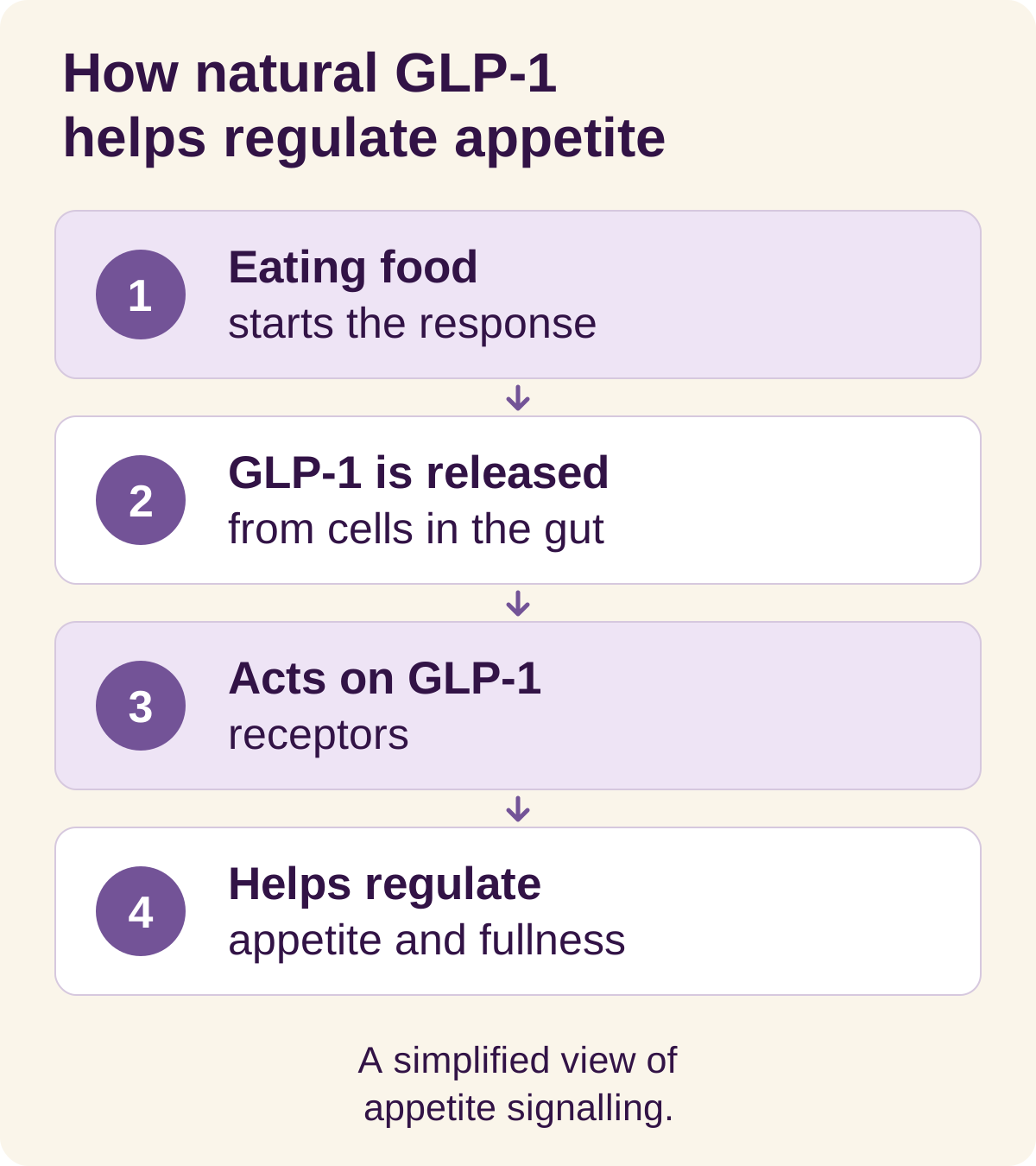
For weight management, one of the most important is appetite regulation.
Mounjaro product information explains that GLP-1 and GIP receptors are found in areas of the brain involved in regulating appetite and food intake. Tirzepatide - Mounjaro active ingredient - activates these receptors and, in clinical studies, reduces energy intake and appetite while increasing the feeling of fullness and reducing the feeling of hunger and food cravings.
This is one of the reasons why GLP-1 has become such an important target in weight management treatments.
It isn't simply about making someone “not hungry”. The aim is to influence and regulate the signals involved in appetite and food intake.
What happens to GLP-1 after you eat?
Your body naturally releases hormones as part of its response to food.
GLP-1 is one of the signals involved in this process. It helps regulate appetite and other functions related to food intake.
Mounjaro uses a dual mechanism, one of them is by mimicking the action of GLP-1 hormone at its receptor, making it a powerful weight loss tool.
How do GLP-1 medicines work?
Some medicines used for weight management mimic the effects of GLP-1.
Wegovy, for example, contains semaglutide, which acts on the GLP-1 receptor. It is used alongside a reduced-calorie diet and increased physical activity for weight management in eligible adults.
Mounjaro is slightly different.
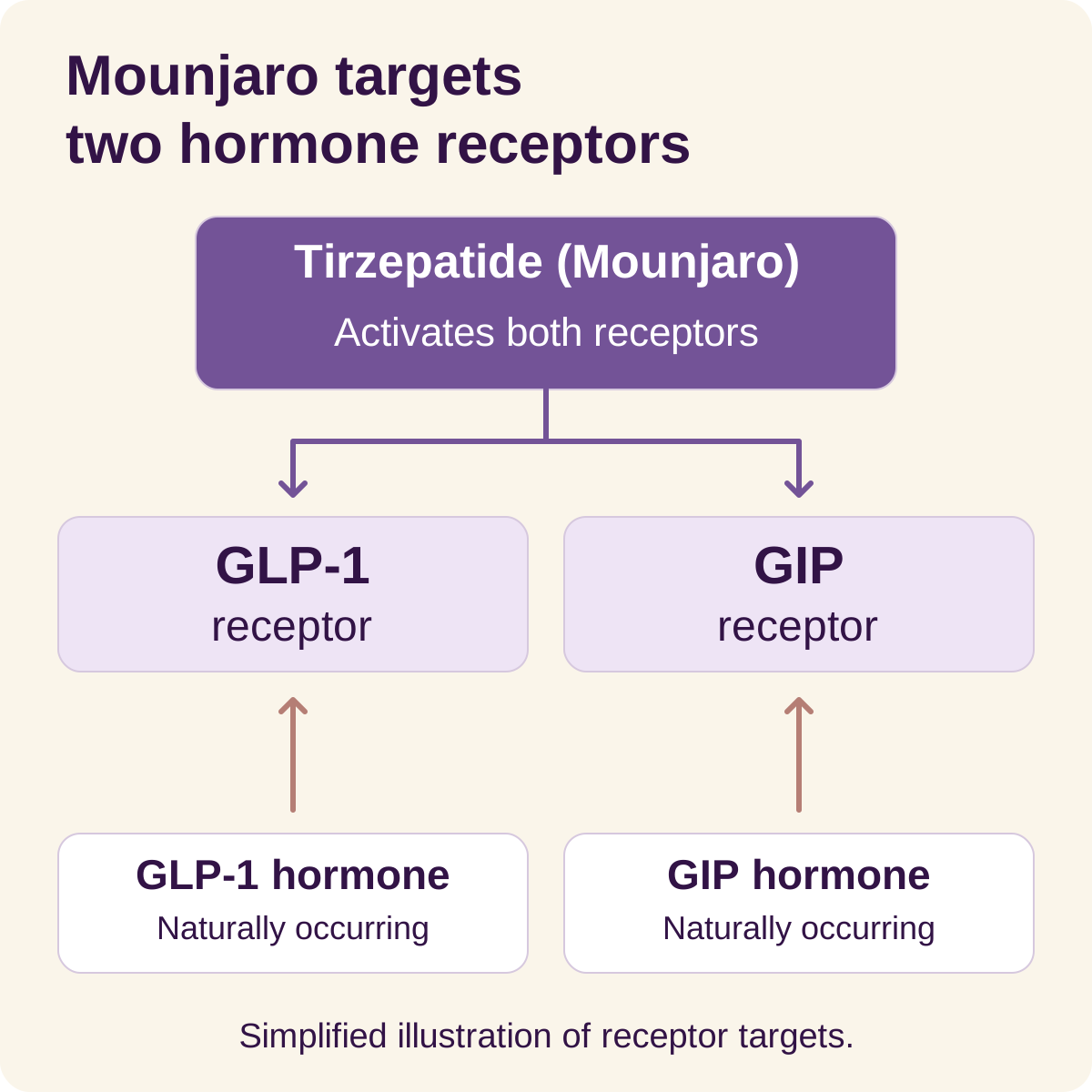
Mounjaro contains tirzepatide, which activates both the GLP-1 receptor and the GIP receptor. This is why tirzepatide is described as a dual GIP/GLP-1 receptor agonist.
Good to know
GLP-1 and GIP are not medicines themselves. They are naturally occurring hormones. Medicines such as semaglutide and tirzepatide activate their receptors and produce effects that can help with appetite regulation and weight management.
GLP-1 vs GIP: what's the difference?
If you've read our guide on ‘How Does Mounjaro Work?’, you'll know that tirzepatide targets two receptors.
GLP-1 and GIP are different hormones, although both are involved in the body's response to food.
Mounjaro activates both receptors, while medicines such as Wegovy act on the GLP-1 receptor alone.
You don't need to understand the detailed pharmacology to use these medicines, but knowing the basic differences can make it easier to understand why different weight loss treatments work in different ways.
| Feature | GLP-1 | GIP |
|---|---|---|
| Abbreviation for | Glucagon-like peptide-1 | Glucose-dependent insulinotropic polypeptide |
| Naturally occurring hormone | Yes | Yes |
| Receptor involved in appetite regulation | Yes | Yes |
| Targeted by tirzepatide (Mounjaro) | Yes | Yes |
| Targeted by semaglutide (Wegovy) | Yes | No |
Simplified for patients. Not intended to describe every effect of either hormone.
Does GLP-1 burn fat?
No. GLP-1 itself should not be described as a ‘fat-burning hormone’.
Weight management medicines that target GLP-1 receptors can reduce food intake by helping regulate your appetite. With Mounjaro, the product information describes that weight and body fat reduction involves a decrease in food intake through appetite regulation, alongside changes in how the body uses fat.
This is translated to people consuming less energy, which can support their weight loss when treatment is used alongside a reduced-calorie diet and increased physical activity.
Is GLP-1 the same as Mounjaro?
No.
This is an easy mistake to make because the terms are often used together.
GLP-1 is a naturally occurring hormone and a receptor target.
Mounjaro is a prescription medicine containing tirzepatide. Tirzepatide activates both GLP-1 and GIP receptors.
Think of GLP-1 as part of your body's natural signalling system, while Mounjaro is a medicine that acts on one part of that system.
Frequently asked questions
Is GLP-1 naturally produced by the body?
Yes. GLP-1 is a naturally occurring hormone involved in the body's response to food and in appetite regulation.
Is Mounjaro a GLP-1 medicine?
Mounjaro is a dual GIP/GLP-1 receptor agonist. Its active ingredient, tirzepatide, activates both GIP and GLP-1 receptors.
Is Wegovy a GLP-1 medicine?
Yes. Wegovy contains semaglutide, which acts on the GLP-1 receptor alone.
Does GLP-1 make you lose weight?
GLP-1 is involved in appetite regulation, but naturally occurring GLP-1 is not a weight loss treatment on its own. Medicines that activate the GLP-1 receptor can help regulate appetite and reduce energy intake, supporting weight loss when used as part of an appropriate weight management plan.
Do GLP-1 medicines work without diet and exercise?
For weight management, medicines such as Mounjaro are used alongside a reduced-calorie diet and increased physical activity. NICE guidelines recommend this combination as part of weight management treatment.
GLP-1 medicines will support your weight loss journey while you embed new healthy habits gradually into your lifestyle.
Related articles
Thinking about weight loss treatment?
If you're considering prescription weight loss treatment, Genmeds offers an online consultation so a prescriber can assess whether treatment is appropriate for you. If prescribed, Mounjaro should be used alongside a reduced-calorie diet and increased physical activity.