
Starting Mounjaro can make you eager to see results.
You might have a particular number in mind, such as losing 10kg, reaching a certain clothing size or getting below a particular BMI.
Having a goal can be useful, but weight loss doesn't always happen at the same rate every week.
So how should you set a realistic goal while taking Mounjaro?
Is there a ‘normal’ amount of weight to lose each week?
Not really.
Your weight can change at different rates throughout treatment. Some weeks you may see a noticeable change, while at other times your weight may stay the same.
NICE states that 0.5kg to 1kg of weight loss per week is generally considered safe and sustainable, but also says that weight loss goals should be tailored to each individual. For example, people with type 2 diabetes may lose weight more slowly compared to people who don’t have the condition.
This means you shouldn't treat 0.5kg or 1kg loss as a weekly target that you have to hit.
Your prescriber can help you set an appropriate goal based on your individual circumstances.
Should you set a target weight?
You can, but it doesn't have to be the only measure of progress.
Your initial goal might be based on losing a certain percentage of your starting weight rather than reaching a particular number on the scale.
For example, your prescriber may discuss a 5% reduction in your initial body weight as an important treatment milestone.
NICE recommends reviewing treatment if less than 5% of initial body weight has been lost after six months on the highest tolerated dose. This is a point for a clinical review, rather than a promise that everyone should lose at least 5% within a particular period.
Why does my weight change from week to week?
It is normal for body weight to fluctuate.
This means that one weigh-in doesn't necessarily tell you whether your treatment is working or not.
For example, you might weigh slightly more one week and less the next without this representing a meaningful change in your overall progress.
This is why it can be more useful to look at your weight over a longer period rather than becoming concerned about individual measurements.
Try to weigh yourself under similar conditions when possible, such as at around the same time of day and using the same weighing scale.
What if I don't lose weight every week?
Don't assume that Mounjaro has stopped working because your weight hasn't changed for one or two weeks.
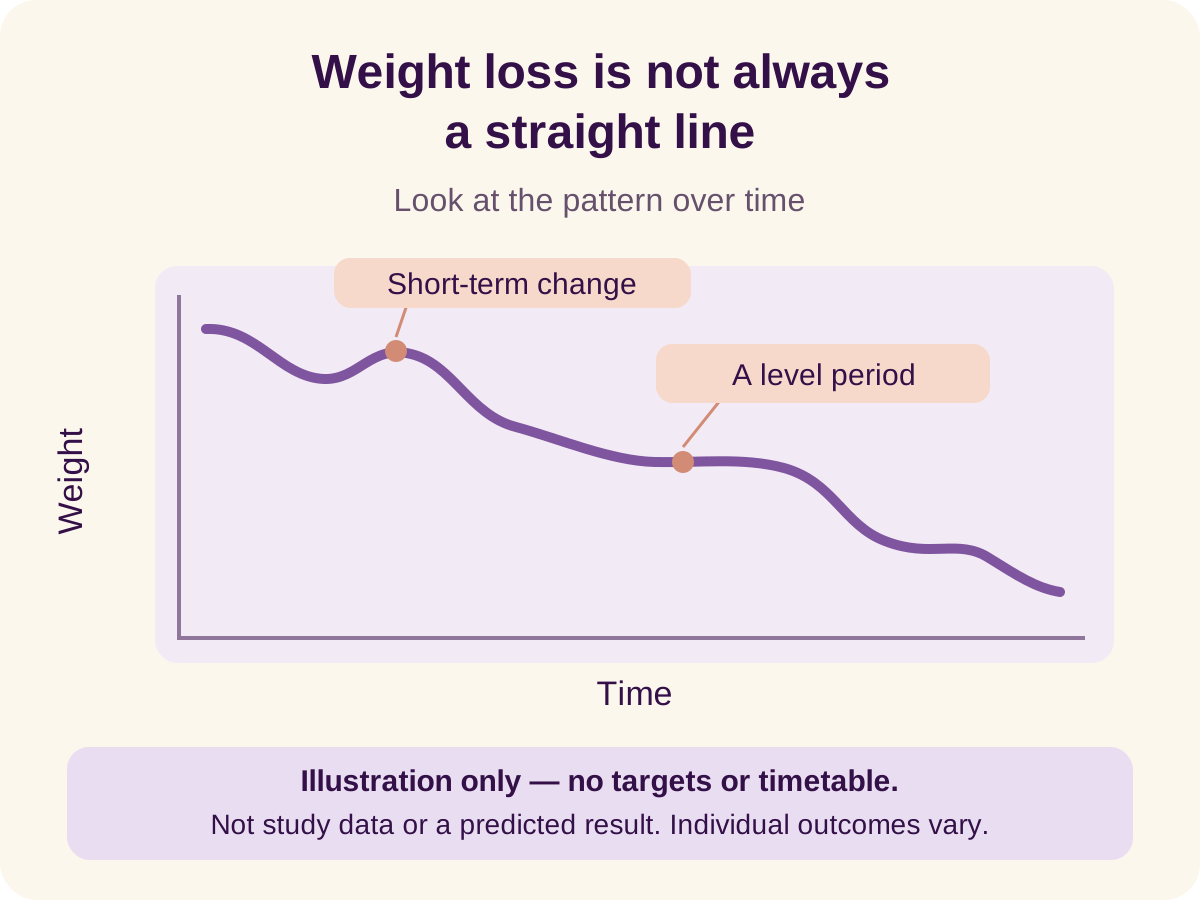
Weight loss isn't necessarily linear.
There may be periods when your weight changes more slowly or stays around the same level.
If your weight has stopped changing for a longer period, or you're concerned that you're not getting enough benefit from treatment, speak to your prescriber.
You shouldn't increase your Mounjaro dose yourself simply because the number on the scale hasn’t changed.
Your dose should be adjusted according to the prescribed treatment schedule and your individual circumstances.
Does the amount of weight you have to lose affect your goal?
It can.
Someone starting treatment at a higher body weight may have a different weight-loss goal from someone starting at a lower weight.
Your prescriber may therefore focus on percentage weight loss rather than simply looking at the number of kilograms lost.
For example, losing 5kg represents a different percentage of body weight for someone weighing 100kg compared to someone weighing 70kg.
This is one reason that comparing your progress with someone else's isn't particularly fair.
What if I have type 2 diabetes?
Weight loss can happen more slowly in people with type 2 diabetes.
NICE specifically notes that people with type 2 diabetes may lose weight at a slower rate than people without diabetes.
This doesn't necessarily mean that treatment isn't working.
Your blood glucose control and other health outcomes may also be relevant when your treatment is reviewed.
If you have type 2 diabetes and are taking other medicines for your condition, make sure your prescriber knows what you're taking.
Should you aim to lose weight as quickly as possible?
No.
The aim isn't to lose as much weight as possible, as quickly as possible.
NICE recommends setting realistic and safe weight-loss goals and tailoring these to each individual.
Trying to lose weight too quickly can also make it more difficult to maintain a balanced diet and get the nutrients your body needs.
Mounjaro should be used alongside a reduced-calorie diet and increased physical activity rather than as a replacement for healthy lifestyle measures.
What can you do if your progress is slower than expected?
If your weight loss isn't progressing as you'd hoped, don't immediately assume that you need a higher dose.
Instead, consider whether you're following your treatment as prescribed and continuing with the lifestyle measures that form part of weight management.
This includes:
- eating a nutritionally balanced diet
- maintaining an appropriate reduction in calorie intake
- staying physically active
- taking Mounjaro as prescribed
- attending follow-up appointments
- discussing concerns with your prescriber
NICE recommends that people using tirzepatide receive support with diet and physical activity and that treatment is reviewed regularly over time.
What if I haven't lost 5% of my starting weight?
The 5% percentage is particularly important because it forms part of the NICE treatment review criteria.
After six months on the highest tolerated dose, the percentage of initial weight lost should be calculated.
Should your weight reduction fall below 5%, NICE advises exploring the underlying reasons with your prescriber to evaluate whether continuing treatment remains appropriate by weighing benefits against potential risks.
This doesn't mean you should stop Mounjaro yourself.
The decision should be made with your prescriber.
Remember that progress isn't only about the number on the scale
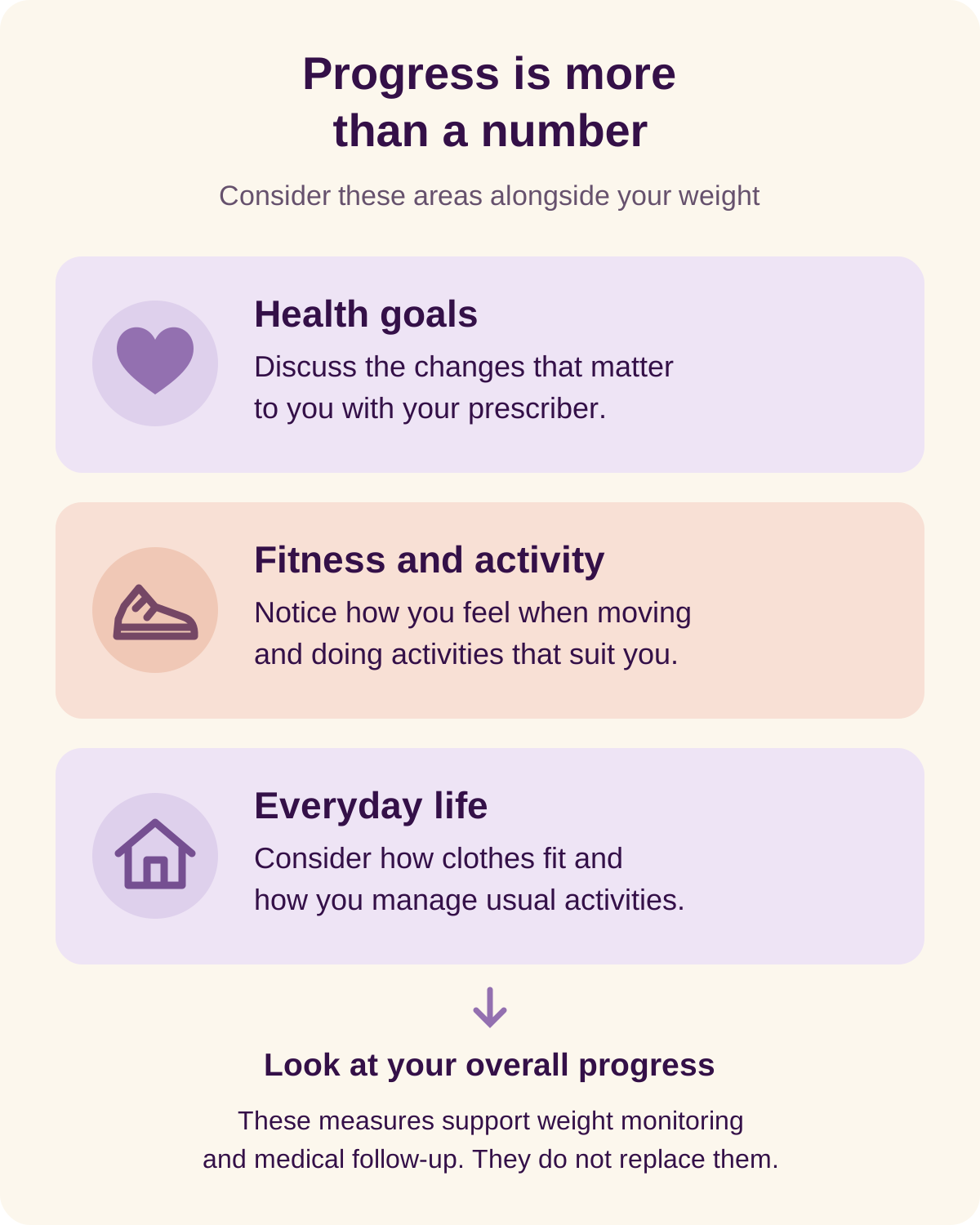
Weight is an important part of weight management, but it isn't the only thing worth paying attention to.
You may also notice changes in:
- how your clothes fit
- how easily you carry out everyday activities
- your ability to be physically active
- your eating habits
- your relationship with portion sizes
These changes don't replace monitoring your weight or medical follow-up, but they can be useful ways of looking at your overall progress.
The main thing to remember
There isn't a fixed weight loss rate that everyone should expect each week while using Mounjaro.
NICE suggests that 0.5kg to 1kg per week is generally considered safe and sustainable, but this is a general guide and should be tailored to each individual.
Some weeks your weight may change more than other weeks, and sometimes it may not change at all.
The important thing is to look at your progress over time and discuss any concerns with your prescriber.
Mounjaro is intended to be used alongside a reduced-calorie diet and increased physical activity as part of a broader approach to weight management.
Frequently asked questions
How much weight should I lose each week on Mounjaro?
There isn't a specific amount that everyone should lose. NICE suggests 0.5kg to 1kg per week is generally considered safe and sustainable, but weight-loss goals should be individualised.
Is it normal to stop losing weight for a week?
Weight loss doesn't always happen at a constant rate. A short period without a change on the scale doesn't necessarily mean that Mounjaro has stopped working.
How long should it take to lose 10kg on Mounjaro?
There isn't a set timeframe. The amount and rate of weight loss varies between individuals, so it isn't possible to give everyone the same timeline.
What if I'm losing weight more slowly than expected?
Speak to your prescriber if you're concerned. They can review your progress, treatment and lifestyle factors and decide whether any changes are appropriate.
Should I increase my Mounjaro dose if I'm not losing weight?
No. Don't change your Mounjaro dose yourself. Dose increases should follow the prescribed titration schedule and be based on your individual circumstances.
Is losing 5% of my weight on Mounjaro good?
A 5% reduction in initial body weight is an important treatment milestone used in NICE's review recommendations. However, it shouldn't be treated as a universal deadline or guarantee for every person.
Related articles
You may also find these useful:
- How Does Mounjaro Work?
- When Does Mounjaro Start Working?
- What Can You Eat While Taking Mounjaro?
- Mounjaro and Exercise: How to Stay Active During Weight Loss
Considering Mounjaro?
If you're considering prescription weight management treatment, Genmeds offers an online consultation where a prescriber can assess whether treatment is appropriate for you.
If prescribed, Mounjaro should be used alongside a reduced-calorie diet and increased physical activity.