
What is Foundayo?
Foundayo (orforglipron) is a prescription tablet used with a reduced-calorie diet and increased physical activity for weight management in eligible adults. This guide discusses side effects and medicine interactions in the UK. [1] [2]
Foundayo activates GLP-1 receptors. GLP-1 is a gut hormone involved in appetite, blood glucose and stomach emptying.
It acts on appetite-regulating pathways in the brain and can help reduce hunger and food intake. The response varies between people. [2]
Common side effects
Very common digestive side effects include nausea, vomiting, constipation, diarrhoea, indigestion and abdominal pain. Bloating, belching, wind and acid reflux are also listed as common side effects. [2]
Digestive symptoms can be more noticeable when starting treatment or increasing the dose. They often lessen over time, but can be severe or persistent. Tell your prescriber if symptoms are troublesome, and use the urgent-help advice below for warning signs.
Other possible effects include tiredness, headache, dizziness, hair loss, a faster pulse and lower blood pressure. Low blood sugar is more likely with insulin or sulfonylureas, although it can also occur without them. [1] [2]
How Foundayo interacts with other medicines
Before starting Foundayo, give your pharmacist or prescriber an up-to-date list of medicines, supplements and herbal products. Ask for a review again whenever another treatment is started, stopped or changed. A review helps identify risks; it cannot guarantee that treatment will be free of side effects. [2]
Orforglipron is broken down mainly by the liver enzyme CYP3A4; other enzymes and transport proteins also contribute to how the body handles it. Some medicines can raise or lower its concentration, and Foundayo can affect other medicines too. It is not recommended in severe liver impairment, where exposure can be higher. [1]
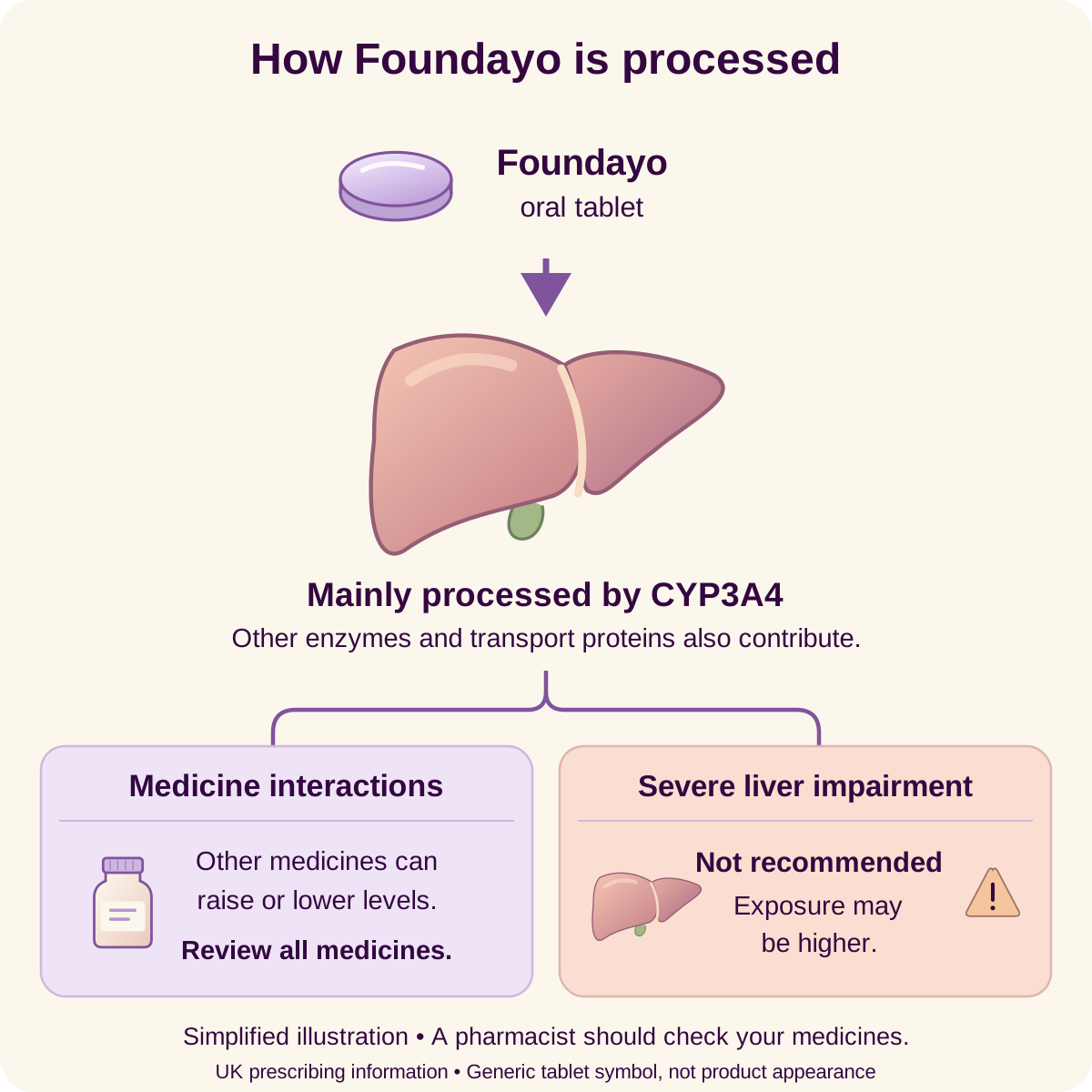
The following are examples of important interactions, not a complete list. They do not all share the same mechanism. Your pharmacist or prescriber must check the exact medicine, dose and combination; do not stop or adjust existing treatment yourself.
Medicines that change Foundayo levels
Strong CYP3A4 inhibitors
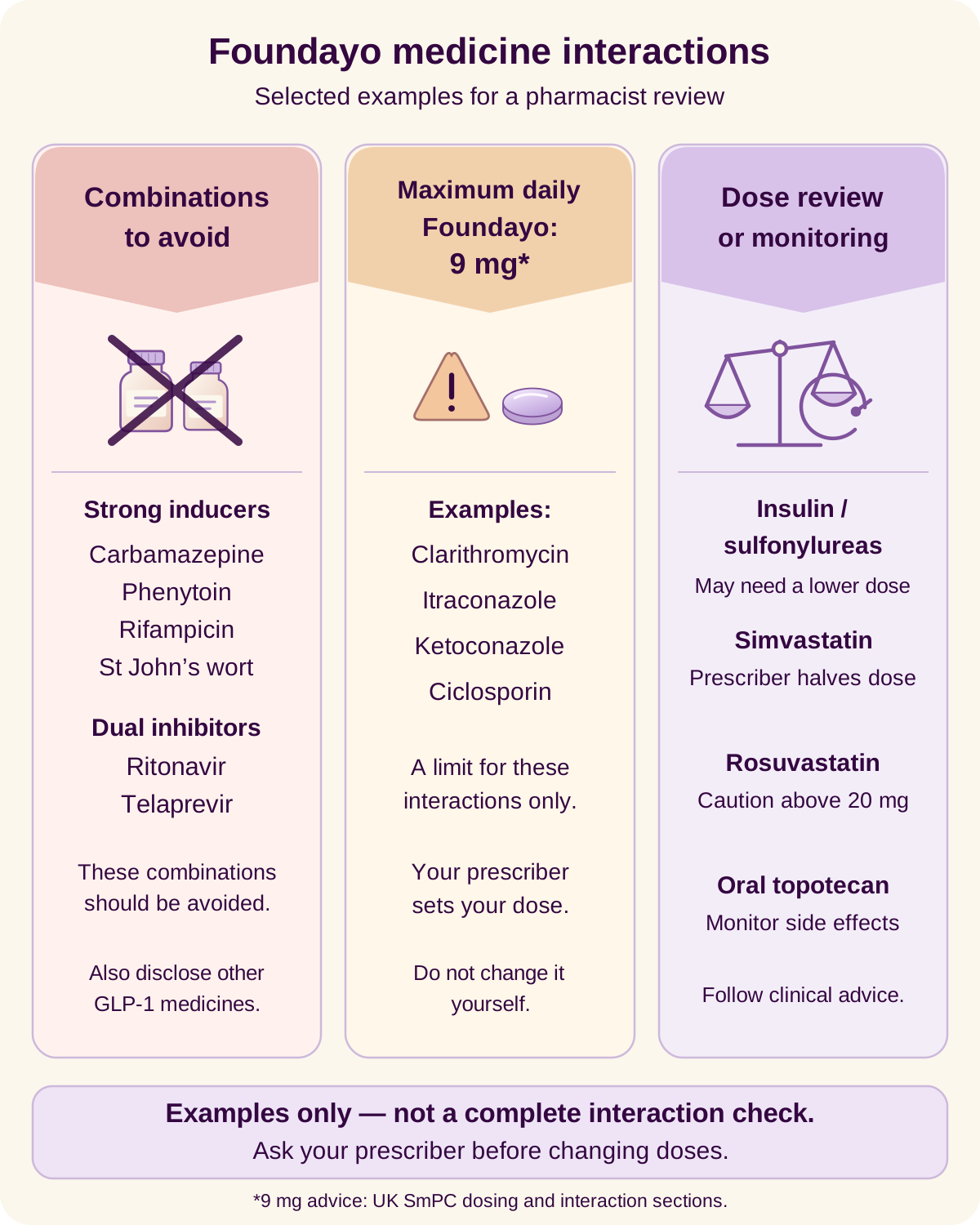
Strong CYP3A4 inhibitors such as clarithromycin, itraconazole and ketoconazole can increase orforglipron exposure. The UK prescribing information limits Foundayo to 9 mg once daily with these medicines. Strong CYP3A4 inhibitors that also inhibit OATP1B, such as ritonavir or telaprevir, should be avoided with Foundayo rather than treated as routine 9 mg combinations. [1]
CYP3A4 inducers
Strong CYP3A4 inducers can reduce Foundayo’s effectiveness and should be avoided with it. Examples named in the UK prescribing information are carbamazepine, phenytoin, rifampicin and St John’s wort. Moderate inducers such as bosentan or efavirenz need assessment and monitoring rather than being placed in the same category. [1]
OATP1B transport inhibitors
OATP1B is the name of a family of transport proteins. The dosing and interaction sections of the UK prescribing information specify a 9 mg daily maximum with clinical OATP1B inhibitors.
Ciclosporin is an example. If the medicine is also a strong CYP3A4 inhibitor, such as ritonavir or telaprevir, the combination should be avoided. Your pharmacist must check the exact combination. [1]
Other medicines to discuss
Other GLP-1-based treatments
Tell your prescriber if you use another GLP-1-based treatment, including Wegovy or Mounjaro. Do not add another weight-management medicine or switch treatments yourself. Wegovy’s leaflet specifically advises against using it with another GLP-1 receptor agonist. [3] [7]
Insulin and sulfonylureas
Insulin and sulfonylureas, such as gliclazide or glimepiride, increase the risk of low blood sugar when used with Foundayo. Your prescriber may need to reduce their doses and will tell you how to monitor and treat low blood sugar. Do not adjust them yourself. [1] [2]
If you have diabetes and develop symptoms such as sweating, shaking or confusion, check your glucose if possible and follow your agreed hypo-treatment plan promptly. If someone is unconscious or cannot swallow safely, do not give food or drink; call 999 and follow their emergency plan. [4]
Statins and other medicines
The statin instructions differ. The UK prescribing information says the prescriber should halve the simvastatin dose when it is used with Foundayo. For rosuvastatin, it advises caution above 20 mg daily; this is not a blanket 20 mg maximum for both statins. Ask your prescriber to review the prescription before making any change. [1]
Oral topotecan, a cancer medicine, also needs monitoring for side effects when used with Foundayo. [1]
If you take blood-pressure medicines, tell your prescriber about dizziness or faintness; Foundayo can lower blood pressure and your other treatment may need review. [1] [2]
Oral contraception, pregnancy and breastfeeding
Do not use Foundayo during pregnancy or breastfeeding. Arrange to stop it at least 3 weeks before trying to become pregnant. If pregnancy occurs during treatment, stop taking it and contact your doctor. [1] [2]
Use effective contraception during treatment if you could become pregnant. Foundayo may reduce the effectiveness of oral contraceptives. For 30 days after starting and for 30 days after each dose increase, either add condoms or another suitable barrier method while continuing your pill, or arrange a suitable non-oral method with professional advice. [1] [2]
Health conditions to discuss
Tell your prescriber about your full medical history, including the following conditions. These need individual assessment and are not all automatic reasons to rule out treatment:
- Thyroid conditions.
- A personal or family history of medullary thyroid carcinoma (MTC).
- Active cancer and any cancer treatment.
- Multiple endocrine neoplasia type 2 (MEN2).
- Previous pancreatitis.
- Gallbladder disease.
- Diabetic retinopathy, macular oedema or other eye/vision problems.
- Severe heart failure, especially NYHA class IV, for which Foundayo is not recommended.
- Severe liver impairment, for which Foundayo is not recommended.
- An allergy to orforglipron or any tablet ingredient. Foundayo must not be used if you have this allergy.
- Severe digestive disease or very slow stomach emptying (gastroparesis).
- Kidney problems, especially if vomiting or diarrhoea causes dehydration.
Your clinician will explain what your history means for suitability and monitoring. [1] [2]
Provide details of all prescription medicines, over-the-counter products, vitamins, supplements and herbal remedies you take, have recently taken or plan to start. This article and its diagrams cannot replace a check of your full medicine list. [2]
When to get urgent medical help
- Possible pancreatitis: stop Foundayo and seek urgent medical help for severe, persistent abdominal pain, which may spread to the back, with or without nausea or vomiting. Do not wait for permission to seek help. [1] [2] [8]
- Severe digestive symptoms: get urgent medical advice for persistent vomiting, severe constipation or abdominal swelling. Sudden severe abdominal pain, or severe pain with vomiting and inability to pass wind or stool, needs emergency assessment. [2] [6]
- Dehydration: contact NHS 111 promptly if you keep vomiting and cannot keep fluids down, or have continuing dehydration symptoms such as passing much less urine. Severe dehydration can damage the kidneys. [6]
- Possible severe allergy: call 999 for sudden swelling of the lips, tongue or throat, difficulty breathing, or collapse. Stop taking Foundayo and do not wait to see whether symptoms pass. [2] [5]
Tell your doctor promptly about sudden changes in vision or other unusual visual symptoms. [2]
General anaesthesia or deep sedation
Tell the surgical team and anaesthetist that you take Foundayo before a procedure under general anaesthesia or deep sedation. It slows stomach emptying, so food or fluid may remain in the stomach despite fasting.
This can increase the risk of stomach contents entering the lungs. The team may need to change fasting or anaesthetic plans. Follow their individual instructions; do not stop or restart Foundayo for a planned procedure on your own. [1] [3]