Product Description
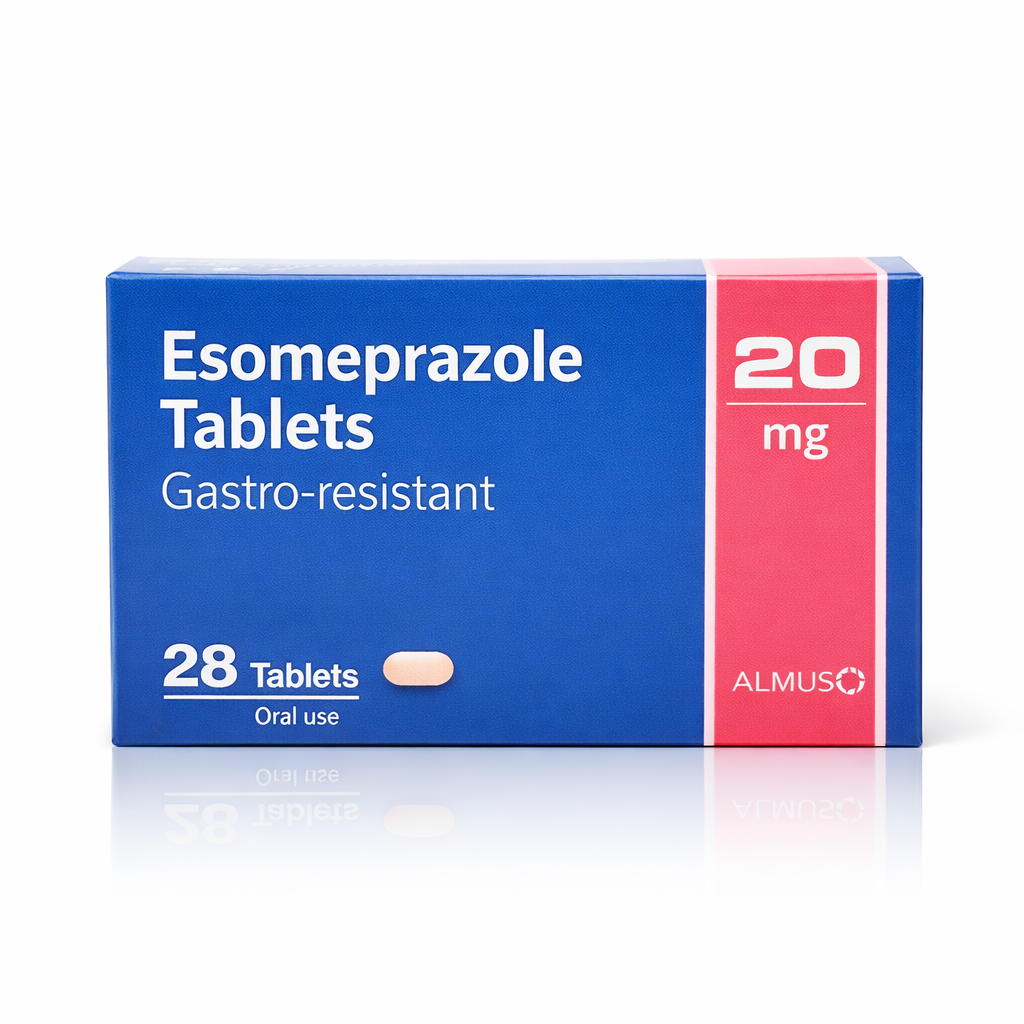
What Is Esomeprazole 20mg
Esomeprazole is a medicine from a group known as proton pump inhibitors (PPIs). These medicines reduce the amount of acid produced by the stomach.
It is commonly used to treat acid reflux and gastro-oesophageal reflux disease (GERD). Esomeprazole may also be prescribed to relieve symptoms linked to stomach ulcers, including those caused by long-term use of NSAIDs or infection with Helicobacter pylori.
Esomeprazole is a convenient option for managing acid-related conditions, as it is taken once daily and provides symptom relief throughout the day.
How to Take Esomeprazole
The usual dose is one tablet or capsule once daily, ideally taken around one hour before food, unless advised otherwise by your doctor.
Taking This Medicine
-
Esomeprazole can be taken at any time of day
-
It may be taken with or without food
-
Swallow the tablet whole with a glass of water
-
Do not chew or crush the tablet
The tablets contain specially coated pellets that protect the medicine from stomach acid. Damaging these pellets can reduce how well the medicine works.
If You Have Difficulty Swallowing Tablets
If you find it difficult to swallow the tablet:
-
Place it into a glass of still (non-fizzy) water
-
Do not use any other liquids
-
Stir until the tablet breaks apart (the liquid will not be clear)
-
Drink the mixture immediately or within 30 minutes, stirring again before drinking
-
Rinse the glass with half a glass of water and drink it to ensure the full dose is taken
Do not chew or crush the solid pieces, as they contain the active medicine.
If You Take More Than You Should
If you take more esomeprazole than prescribed, contact your doctor or pharmacist immediately.
If you have any questions about using this medicine, seek advice from a healthcare professional.
Possible Side Effects
Like all medicines, esomeprazole can cause side effects, although not everyone will experience them.
Common side effects may include:
-
Headache
-
Stomach or gut symptoms such as diarrhoea, constipation, stomach pain, or wind
-
Feeling sick (nausea) or vomiting
Uncommon side effects may include:
-
Swelling of the feet or ankles
-
Sleep disturbances, including insomnia
-
Dizziness, drowsiness, or tingling sensations
-
Vertigo
-
Dry mouth
-
Changes in liver function blood tests
-
Skin reactions such as rash, hives, or itching
-
Increased risk of fractures of the hip, wrist, or spine, particularly with long-term use
Rare but serious side effects
In very rare cases, esomeprazole may affect white blood cells, which can weaken the immune system. Seek medical advice urgently if you experience:
-
Persistent fever with severe tiredness
-
Sore throat, mouth ulcers, or neck pain
-
Difficulty urinating
Your doctor may arrange a blood test to rule out a serious condition known as agranulocytosis. Always inform healthcare professionals that you are taking esomeprazole.
For a full list of side effects, read the Patient Information Leaflet supplied with your medication.